
Is My Hair Shedding Normal? (5 Ways to Tell)
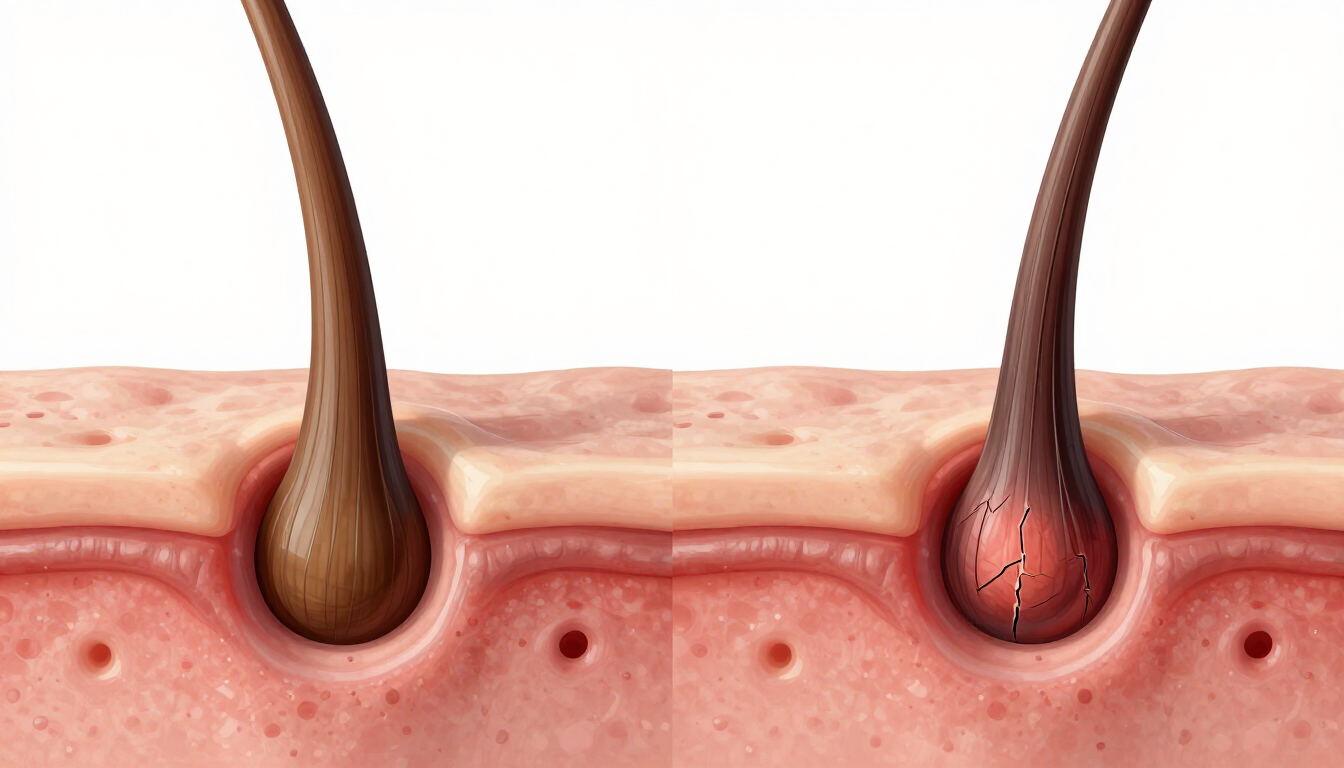
Normal hair shedding involves losing 50 to 100 hairs daily as part of the natural growth cycle. Hair loss occurs when the shedding doesn't stop, hair doesn't regrow, or follicles shrink. Distinguishing between them requires looking at the bulb, volume, and scalp health over time.
Finding hair on your brush or in the shower drain can be an alarming experience. At Funnah Medix, we see many patients who are worried that every strand lost is a step closer to thinning. However, it is essential to understand that hair shedding is a biological necessity. Your scalp is a dynamic ecosystem where follicles are constantly transitioning through different phases. To help you navigate your concerns, we have developed this comprehensive guide to help you determine if your shedding is a normal part of life or a signal that your scalp needs professional intervention.
What is normal hair shedding?
Medical professionals and dermatologists generally agree that losing between 50 and 100 hairs per day is perfectly normal. This number might seem high, but considering the average scalp contains roughly 100,000 hair follicles, losing 0.1% of them daily is barely noticeable. Normal shedding occurs because each hair follicle has its own independent life cycle. When a hair reaches the end of its life, it falls out to make room for a new, healthy strand to emerge from the same pore.
For many, shedding becomes more noticeable depending on hair length and texture. If you have long, dark hair, five strands in the sink look much more significant than five short, light-colored strands. Similarly, if you only wash your hair twice a week, you might see a large "clump" in the drain. This isn't necessarily excessive; it is likely just the accumulation of several days' worth of normal shedding that was held in place by your styling products or natural oils until the water loosened them. Understanding this distinction is the first step toward peace of mind.
Understanding the hair growth cycle
To grasp why hair falls out, we must look at the three primary phases of hair growth. Every single hair on your head is currently in one of these stages, and they do not all change at the same time. If they did, humans would molt like birds or certain mammals, losing all their hair at once before growing it back.
- Anagen (The Growth Phase): This is the longest phase, lasting anywhere from two to seven years. During this time, the hair is actively growing from the root. About 85% to 90% of the hair on your head is usually in the anagen phase at any given time.
- Catagen (The Transition Phase): This short stage lasts about two to three weeks. The hair follicle shrinks and detaches from the dermal papilla (the blood supply). The hair is no longer growing, but it hasn't fallen out yet.
- Telogen (The Resting Phase): This phase lasts about three months. The hair sits dormant while a new hair begins to form beneath it. At the end of this phase, the old hair is pushed out (this is the shedding we see) and the cycle restarts with a new anagen hair.
When this cycle is balanced, your hair density remains stable. Problems arise only when a disproportionate number of hairs are pushed into the telogen phase simultaneously, or when the anagen phase is cut short by genetics or health issues.
https://irp.cdn-website.com/894c92ac/dms3rep/multi/1779974326226-1_1-YdR.png
How can I tell the difference between shedding and hair loss?
The term "shedding" (medical term: telogen effluvium) refers to hair falling out, while "hair loss" (medical term: alopecia) refers to the failure of hair to grow back. Identifying which one you are experiencing is critical for choosing the right treatment at Funnah Medix . Here are five ways to distinguish between the two:
- The White Bulb Test: Look at the end of the hair that fell out. If you see a small, hard white bulb at the root, it means the hair was in the telogen phase and fell out naturally. If there is no bulb, the hair might be breaking due to damage rather than shedding from the root.
- The Pull Test: Gently grasp about 40-60 hairs between your fingers and tug lightly. If more than six hairs come out, you may be experiencing excessive shedding. If only one or two come out, you are likely in the normal range.
- Scalp Visibility: In cases of true hair loss, you will notice the scalp becoming more visible, particularly at the crown or the part line. Shedding usually results in a general decrease in ponytail thickness but doesn't immediately create distinct bald patches.
- Widening Part Line: If your part line looks wider than it did a year ago, this is often a sign of thinning (hair loss) rather than temporary shedding.
- Regrowth Presence: Check for "baby hairs" along your hairline. If you see short, fine hairs growing in, your shedding is likely normal and the follicles are still active. If you see no new growth, it may be hair loss.
Common causes of excessive hair shedding
Excessive shedding, or telogen effluvium, is often a temporary reaction to a specific stressor. When the body undergoes a significant shock, it shifts its energy away from "non-essential" functions like hair growth to focus on vital organ recovery. This causes a large percentage of hairs to enter the resting phase all at once. Usually, the shedding happens two to four months after the triggering event.
Common triggers include:
- High levels of emotional or physical stress
- Rapid weight loss or restrictive dieting
- Giving birth (postpartum shedding)
- High fever or recovery from a major illness
- Starting or stopping certain medications, such as hormonal birth control
In most of these cases, once the stressor is removed or the body adjusts, the hair will naturally return to its normal cycle within six to nine months. However, if the shedding persists longer than six months, it may have transitioned into chronic telogen effluvium, which requires a deeper look into your systemic health, such as iron levels or thyroid function.
https://irp.cdn-website.com/894c92ac/dms3rep/multi/1779974326228-1_1-slu.png
When should I see a professional for hair loss?
While temporary shedding often resolves on its own, true hair loss is progressive. The earlier you address it, the more hair you can save. You should book a consultation at a specialized hair clinic if you notice any of the following "red flags":
- Patchy Loss: If you see circular bald spots that are smooth and coin-sized, this could be Alopecia Areata, an autoimmune condition.
- Itching or Pain: Normal shedding is painless. If your scalp is itchy, burning, or tender, it might indicate an inflammatory condition like cicatricial alopecia or a fungal infection.
- Excessive Thinning at the Temples: This is often the first sign of androgenetic alopecia (pattern baldness), which is genetic and requires proactive treatment to manage.
- Sudden, Massive Clumps: If your hair is falling out in large handfuls rather than individual strands, it warrants an immediate medical assessment.
At Funnah Medix, we believe in a holistic approach. We don't just look at the hair; we look at the person. During a consultation, we evaluate your medical history, lifestyle, and scalp health to determine if your shedding is a symptom of a deeper issue. You can learn more about us and our philosophy of compassionate, evidence-based care to see why we are the trusted partner for so many individuals facing hair challenges.
Signs that your hair shedding is permanent
Permanent hair loss often involves a process called "miniaturization." This is when the hair follicle itself begins to shrink under the influence of hormones (specifically DHT). With each cycle, the hair produced becomes thinner, shorter, and less pigmented until the follicle eventually closes entirely and stops producing hair altogether.
If you notice that the hairs you are shedding are much thinner than the hairs on the back of your head, this is a classic sign of miniaturization. Unlike temporary shedding, where the hair falls out but the follicle remains healthy, miniaturization is a sign that the follicle is under attack. Without intervention, this leads to permanent thinning. Checking for this early is the key to successful hair restoration and protection.
How does Funnah Medix treat hair loss?
Once we have determined the difference between your shedding and potential loss, we craft a personalized plan. For those experiencing temporary shedding, we focus on scalp nutrition and stress management. For those with progressive hair loss, we utilize advanced therapies designed to revitalize the follicle and extend the growth phase.
Our treatments often include topical solutions, specialized scalp therapies, and nutritional guidance. We pride ourselves on being enthusiastic partners in your journey, providing the education you need to make informed decisions about your body. If you are tired of wondering if your shedding is normal, it is time to get a definitive answer.
Personalized hair restoration strategies
Every scalp is unique, which is why a "one size fits all" approach rarely works for hair health. At Funnah Medix, we combine clinical expertise with a deep understanding of hair biology to offer:
- Comprehensive scalp health assessments
- Personalized nutritional and lifestyle plans
- Medical-grade topical treatments
- Ongoing monitoring to track regrowth progress
We invite you to contact us today to schedule your assessment. Our team is ready to help you regain your confidence and ensure your hair stays where it belongs—on your head.
https://irp.cdn-website.com/894c92ac/dms3rep/multi/1779974326230-1_1-0VL.png
Summary & Key Takeaways
Understanding the difference between hair shedding and hair loss is the first step toward effective scalp care. While losing 50–100 hairs daily is a normal biological process, anything beyond that—or shedding that doesn't result in regrowth—requires attention. By monitoring your hair's texture, the presence of a root bulb, and changes in your scalp visibility, you can determine if your situation is temporary or progressive.
- Normal shedding is temporary and part of the 3-phase growth cycle.
- Hair loss involves follicle miniaturization or a lack of regrowth.
- Stress and diet are the most common triggers for excessive temporary shedding.
- Early intervention is the most effective way to combat permanent thinning.
- Professional diagnosis is essential for distinguishing between genetic loss and temporary triggers.
If you're ready to take the next step in your hair health journey, our experts are here to guide you through every phase of restoration and protection.